Tennessee history is bigger than battlefields, presidents, and country music. Look a little closer around Nashville, and you'll find stories of African American musicians and business owners, Civil War occupation, religious revival, education, and neighborhoods that helped shape the city visitors know today.
Many of these historic sites in Tennessee are surprisingly easy to explore from downtown. Stay at Noelle, and you can walk to several significant landmarks before venturing into Nashville's surrounding neighborhoods for the stories that don't always make the standard sightseeing itinerary.
Start at the Tennessee State Capitol
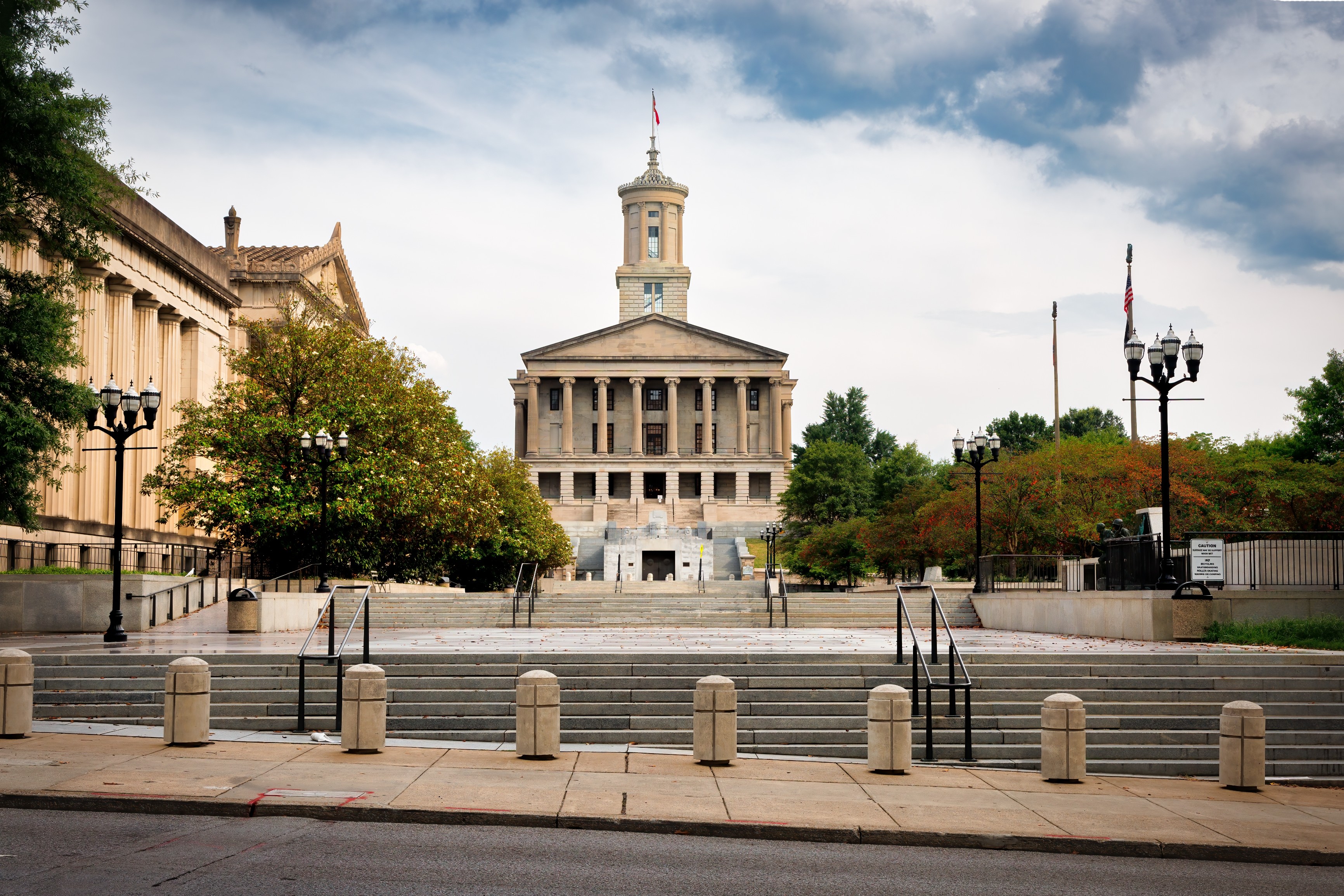
Just a short uphill stroll from Noelle, the Tennessee State Capitol has overlooked Nashville since 1859. Architect William Strickland considered the Greek Revival building his crowning achievement but died before its completion. He's entombed within the building he designed.
The grounds hold another piece of Tennessee history. President James K. Polk and his wife, Sarah, are buried here.
The Capitol remains a working government building, housing the Tennessee General Assembly and governor’s office. Visitors can take free guided or self-guided tours Monday through Friday, giving you the perfect chance to see the interior rather than simply photographing it from outside. Guided tours are offered on the hour, too, between 9 a.m. and 3 p.m. (except noon).
Afterward, walk through Bicentennial Capitol Mall State Park below the Capitol for more Tennessee history and one of downtown's best views back toward the building.
Hear a Vibrant Side of Music History on Jefferson Street
Broadway gets the crowds, but Jefferson Street Sound helps explain how Nashville became Music City.
The North Nashville corridor grew into a center of African American business, education, entertainment, and nightlife, with nearby Fisk University, Meharry Medical College, and Tennessee State University helping shape the community. During Jefferson Street's musical heyday, venues welcomed performers including Jimi Hendrix, Etta James, Little Richard, Otis Redding, and Muddy Waters.
One piece of that history survives at Club Baron, built in 1955 and recognized as the only remaining nightclub from Jefferson Street's 1935-1965 golden age. In 1963, the club hosted a guitar duel between Nashville blues guitarist Johnny Jones and a young Hendrix.
The neighborhood also carries the scars of Nashville's later development. Construction of Interstate 40 running through North Nashville in the 1960s displaced residents and businesses and disrupted the thriving Jefferson Street corridor.
Explore the area's historical markers and look beyond individual Nashville buildings. Here, the neighborhood itself is part of the historic site.
Step Inside More Than a Century of History at the Ryman
The Ryman Auditorium is famous for music, but its story began well before the Grand Ole Opry moved in.
Originally opened as the Union Gospel Tabernacle in 1892, the building was championed by riverboat captain Thomas Ryman after he attended a sermon by evangelist Sam Jones. It became the Ryman Auditorium after Ryman's death and hosted religious gatherings, lectures, community events, and performers long before becoming the Opry's home in 1943.
Today, daytime tours let visitors sit in the famous wooden pews, explore exhibits and memorabilia, and see how the venue evolved over more than 130 years. Backstage tours are available on select days.
For Noelle guests, this is one of the easiest Nashville historical sites to visit. The Ryman is only a few blocks away, making it an easy walk to pair with lunch or more downtown exploring.
See Nashville's Civil War Story at Fort Negley
A short ride south of downtown brings you to Fort Negley, built after Union forces occupied Nashville during the Civil War.
The fort's history goes beyond military strategy. Thousands of African American laborers, including formerly enslaved people and those who had fled slavery, helped construct Nashville's Union fortifications. That story is central to understanding both the fort and the city surrounding it.
Visitors can explore the park's half-mile trail and Visitors Center, where exhibits and a short film provide additional context about Fort Negley's construction and Nashville during the war.
There is one important 2026 visiting note: the historic fort structure at the top of the hill is temporarily closed during improvements, although the Visitors Center and park trail remain open. Current plans call for the fort area to reopen in fall 2026, so check its status before your visit.
Go Back to 1799 at Travellers Rest
For an even earlier chapter, head south of downtown to Travellers Rest Historic House Museum.
Judge John Overton built the original home in 1799. Rather than focusing only on architecture and furnishings, the museum interprets multiple periods of the property's history, including its connections to the Civil War and the Battle of Nashville.
Visitors here can tour the historic house and explore exhibits and archaeological discoveries from the property. Current house tours are offered Tuesday through Saturday at 11 a.m., 1 p.m., and 3 p.m.
Travellers Rest requires a drive from downtown, but it adds valuable context to a trip centered on Tennessee landmarks, particularly for travelers interested in what Nashville looked like long before its modern skyline appeared.
Make Noelle Your Starting Point for Nashville History
You don't need to travel far to find a more complicated and interesting version of Tennessee's past.
From Noelle, start with a short stroll to the State Capitol and Ryman Auditorium. Then branch into North Nashville for Jefferson Street or make a short drive to Fort Negley and Travellers Rest. Together, these places reveal a city shaped by politics, African American culture and entrepreneurship, war, music, faith, and generations of change.
Stay in the middle of it all. Book your stay at Noelle Nashville and make some of Nashville's most fascinating historic landmarks part of your next trip.